In vivo tests: Plastic At Sea owns platforms in natural environments to test the degradation of plastic and other materials by non-biological phenomena (abrasion, ultraviolet light, waves, etc.) and the impact of their colonization by organisms (biofouling).
In vitro tests: Plastic At Sea uses open-circuit aquariums connected to the sea to create an environment as close as possible to the natural habitat, in order to pre-select microorganisms specific to a particular type of plastic. Under controlled conditions, the rate of biodegradability is assessed in real time in miniaturized controlled environments.
Plastic At Sea uses patented, state-of-the-art techniques in direct collaboration with research laboratories in various disciplines (microbiology, molecular biology, chemistry, and materials physics), which enable us to test our clients’ products in natural environments to ensure their biodegradability under real-world environmental conditions, yielding reliable results that accurately reflect actual environmental conditions.
Biodegradation, a complex process broken down into four steps:
Biodegradation
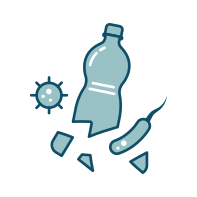
Environmental microorganisms can specifically attach to the surface of materials, causing microcracks.
Bio-fragmentation
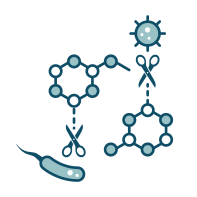
After attachment, certain microorganisms secrete enzymes capable of breaking the polymer's carbon chains, thereby releasing oligomers and then monomers back into the biofilm.
BIO-Assimilation
These oligomers and monomers can then be taken up by the microorganisms in the biofilm and used for their metabolism and growth.
Mineralization
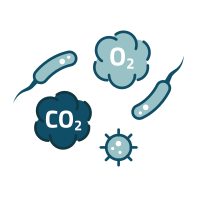
Once assimilated, the organic carbon derived from the polymer is ultimately mineralized into CO2 through microbial respiration.
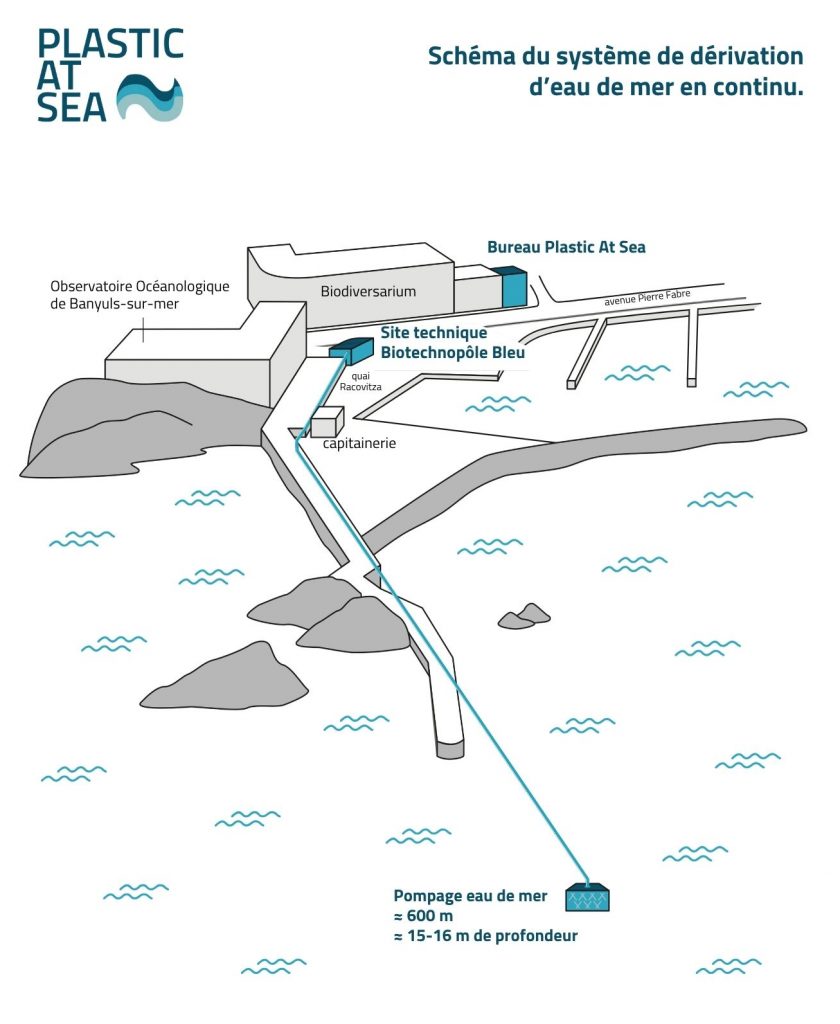
Thanks to its location across from the Banyuls Marine Reserve and its unique pipeline that continuously supplies preserved seawater (including natural flora and fauna) to its laboratories, Plastic At Sea has representative, high-quality marine microbial consortia.
Conducting tests under these real-world conditions thus ensures that biodegradation measurements are more reliable, robust, and ecologically relevant.
Head of the Biodegradation Division
Chloé Caille
Ph.D. in Marine Biology, specializing in biodegradability